Master Reference Chart: DPI vs. Viewing Distance for Large Format Media
A practical, designer-friendly reference for determining the appropriate resolution (DPI/PPI) as viewing distance changes. This page presents a consolidated data table and guidance to help you plan large-format prints, from business cards and apparel to wall murals and billboards. Built with the Seamless Patterns marketplace in mind, this chart aligns with the realities of tileable, carefully selected 8K textures for print, textiles and packaging.
Seamless Patterns—home to over 3,000 carefully selected 8K textures—is available through free, standard and premium licensing tiers. All textures are tileable and seam-checked to ensure clean results at scale.
How to use this chart
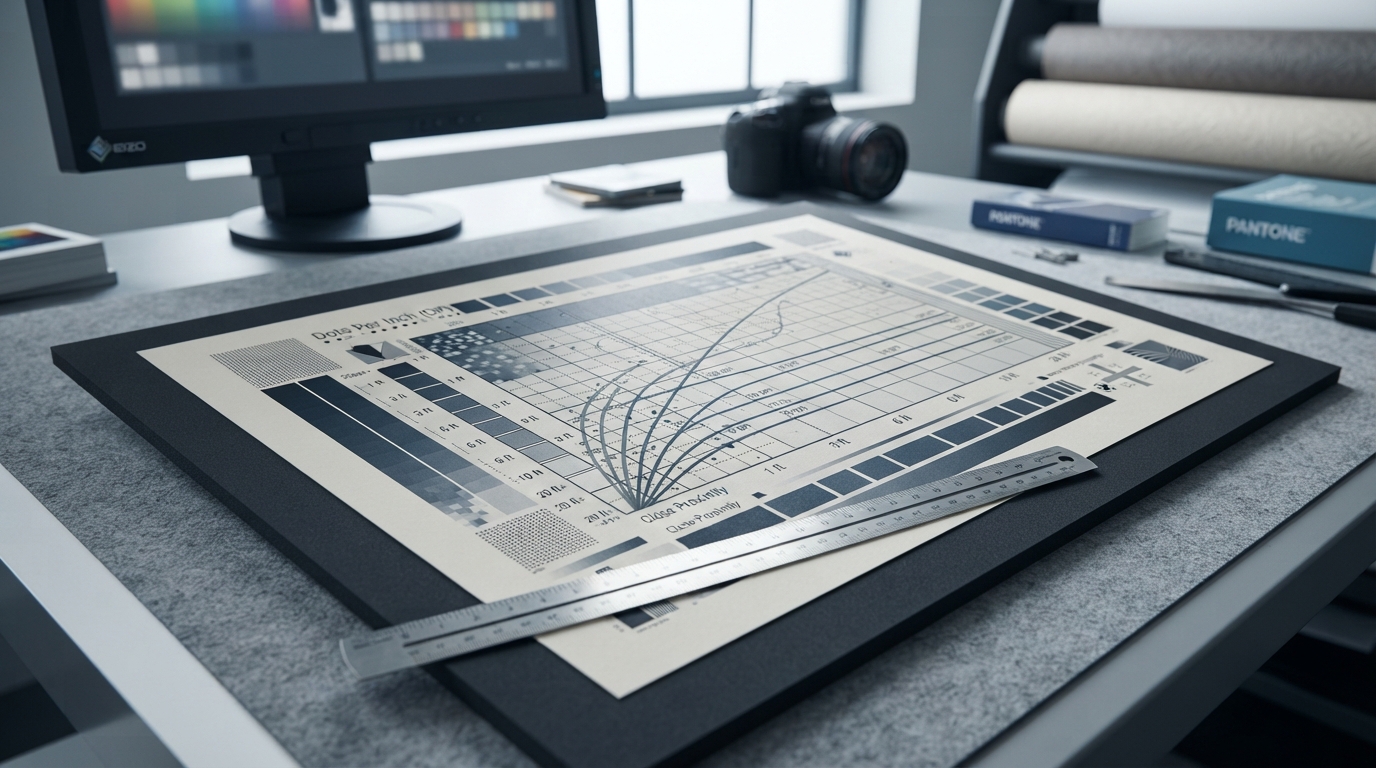
Resolution planning for large-format media is not a fixed rule—it is a function of distance. At close viewing distances, human vision can discern more detail, which pushes higher DPI requirements. As viewers move farther away, the eye perceives less detail, allowing lower DPI without compromising perceived clarity. This chart distills industry guidance into a practical reference you can apply to real-world production, including seamless pattern tiles and 8K textures.
The data below reflects broadly accepted guidelines for different media types and viewing distances. It also highlights the 2026 benchmark for 8K texture scaling—showing how an 8K texture (8192 pixels on a side) performs at common DPIs and giving you a concrete expectation of how tileable textures behave when scaled for large installations.
- Close-up (under 2 ft / 0.6 m): Typical DPI: 300. This is the standard target for handheld media and close-view point-of-sale materials.
- Arm's length (3.3 ft / 1 m): Typical DPI: 180. A practical balance for items viewed from a comfortable, casual distance.
- Gallery or interior wall (5 ft / 1.5 m): Typical DPI: 120. Best for wall art and decorative surfaces observed from a few steps away.
- Trade show or large display (6.5 ft / 2 m): Typical DPI: 90–100. Suitable for medium viewing distances common at events and in retail spaces.
- Outdoor signage (over 10 ft / 3 m): Typical DPI: 15–75. When viewed from afar, lower DPI suffices because the eye blends detail at distance.
When working with Seamless Patterns' 8K textures, you can push your design closer to the 300 DPI threshold for highly detailed, tactile experiences on small to mid-sized surfaces while still benefiting from tileable repetition for expansive installations.
Reference Data Table: DPI by Media & Viewing Distance
This table synthesizes common production guidance with practical notes for large-format design. The 8K texture scaling benchmark uses an 8192-pixel tile. Treat these figures as a starting point and always test with your printer profile, substrate and viewing conditions.
| Media / Output Type | Typical Viewing Distance | Recommended Resolution | Notes & 8K Benchmark |
|---|---|---|---|
| Business cards, flyers and brochures | Under 1 ft / 0.3 m | 300 DPI | For small formats, an 8192 px tile at 300 DPI yields about 27.3 in (69.4 cm) of width and preserves crisp micro-detail. |
| Apparel prints (DTG / textiles) | 1–2 ft / 0.3–0.6 m | 180–300 DPI | Textile prints benefit from higher DPI for fine fabric textures. At 180 DPI, an 8192 px tile is about 45.5 in wide. |
| Wall murals / interior decorative panels | 5 ft / 1.5 m | 120 DPI | Wall installations balance clarity with file size. At 120 DPI, an 8192 px tile is about 68.2 in wide. |
| Trade-show graphics / display panels | 6.5 ft / 2 m | 90–100 DPI | At 100 DPI, a single 8192 px tile is 81.92 in wide. Printers can repeat the tile and adjust scale for viewing from 6–8 ft. |
| Outdoor signage / distance displays | Over 10 ft / 3 m | 15–75 DPI | At 15 DPI, 8192 px covers about 546.1 in; at 75 DPI it covers about 109.2 in. Bold shapes carry better than micro-detail. |
| 8K texture benchmark | General reference | 300 / 180 / 120 DPI | Tile width equals 8192 px ÷ DPI: 27.3 in at 300 DPI, 45.5 in at 180 DPI and 68.2 in at 120 DPI. |
Practical tip: start with the distance your audience will use during normal viewing, then select a DPI that preserves perceived sharpness. If viewers may come closer, reserve higher DPI for critical areas to optimize file size and performance.
Why this data matters for large-format design
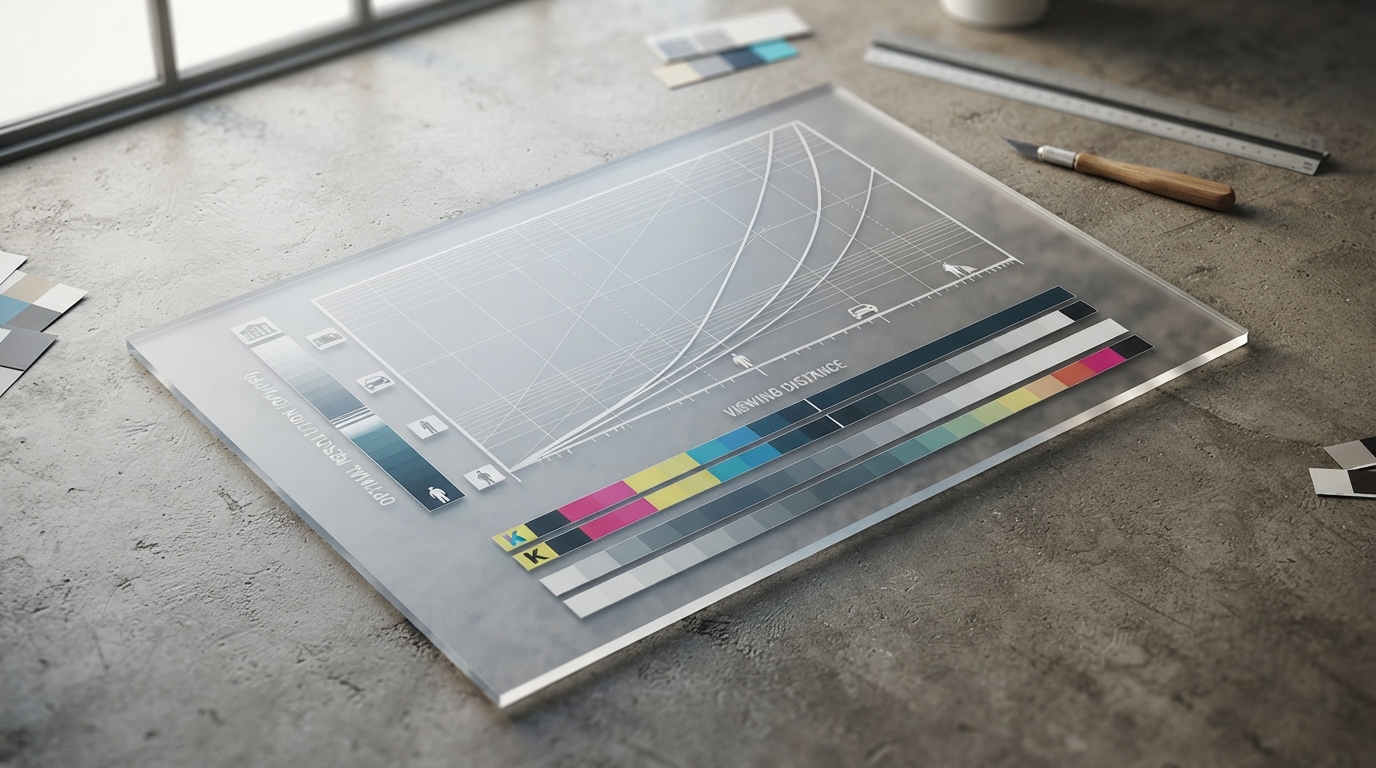
The principle behind the chart is simple: the human eye has limited resolving power at distance. The same image therefore needs different pixel density depending on how far away the viewer is likely to stand. Designers creating seamless textures for textiles, packaging, display graphics and architectural installations benefit from choosing practical DPI targets for each viewing scenario.
Seamless Patterns provides carefully selected 8K textures built for tileable repetition. High source resolution and careful edge verification reduce visible seams on large installations, helping patterns continue cleanly across walls, floors and banners.
- Reserve high-detail textures such as micro-weaves for close viewing or strategic focal areas; large background coverage can often use mid-range DPI without visible loss at the intended distance.
- Seamless tiling covers large areas consistently without requiring one enormous source file.
- 8K textures provide a strong scaling baseline and predictable print dimensions across common DPIs.
Related charts and supplementary data
Frequently Asked Questions
Applying 300 DPI to banners or billboards creates unnecessarily large files. At greater distances the eye blends detail, so lower DPI can still appear sharp.
For prints around 40–48 inches wide viewed from 6–7 feet, roughly 120–180 PPI often balances clarity, file size and production practicality.
Yes. Billboards are viewed from long distances and seamless 8K textures can repeat across the surface instead of relying on one enormous image.
DPI still describes output density, but seamless repetition lets one high-quality tile cover a much larger area without visible joins or a gigantic source file.
Ready to design with confidence?
Use this DPI-versus-viewing-distance chart when selecting textures and planning layouts. With carefully selected 8K textures and flexible licensing, large-format prints can remain sharp, scalable and cost-efficient.